Retiring in BC’s Boundary Country: An Affordable Alternative to the Okanagan
Most retirees looking at British Columbia have heard of the Okanagan. Kelowna, Vernon, Penticton, all good places to retire if you have $1.2 million for a comfortable home and want to be in the busiest corner of interior BC. The Boundary Country sits two and a half hours east of Kelowna, has many of the same draws, and costs a fraction of the price. Here’s the honest case for retiring in Grand Forks or Christina Lake.
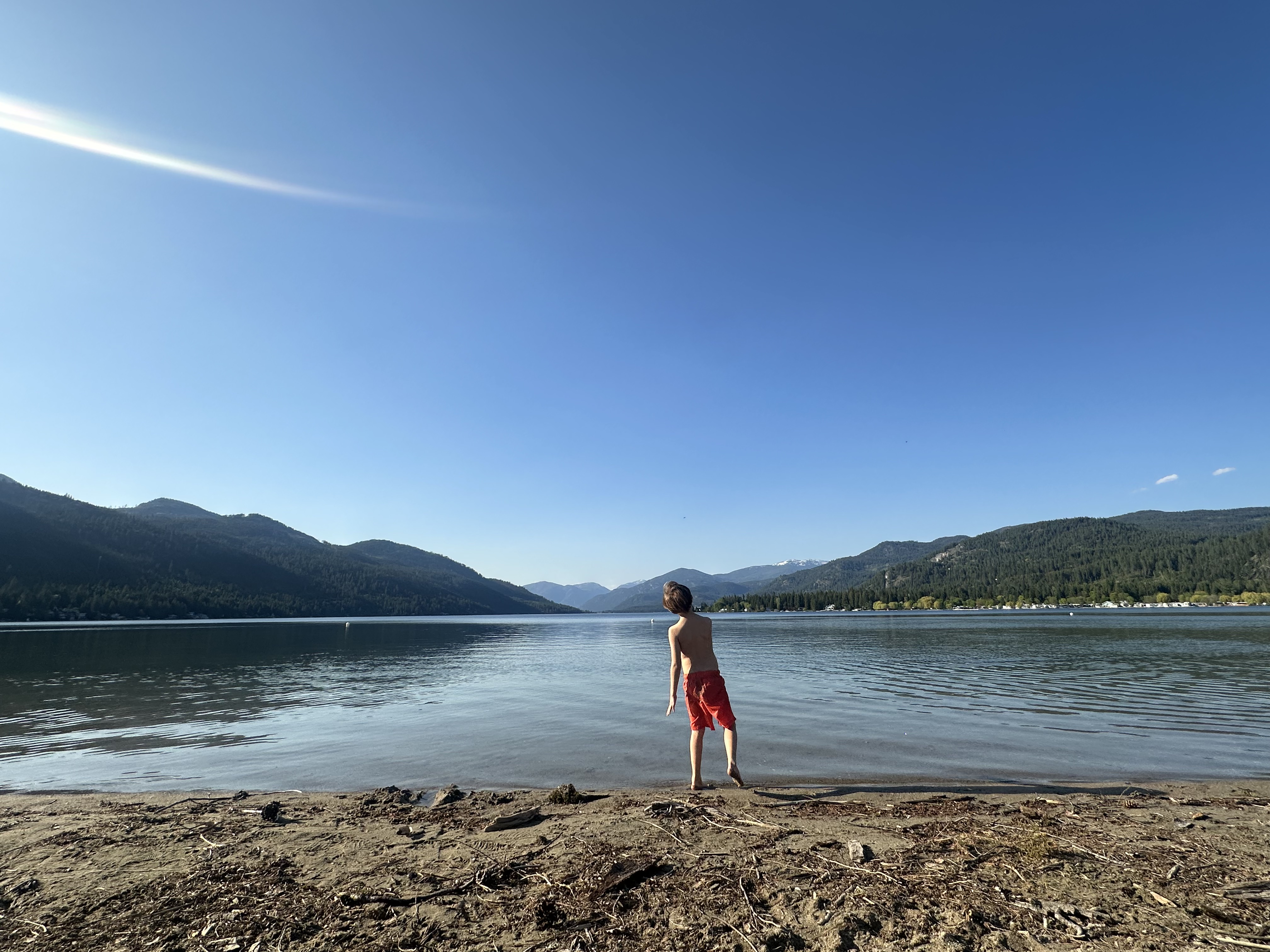
If lake living is the appeal, see what year-round life at Christina Lake is actually like.
For more on daily life there, see what it’s actually like to live in Grand Forks.
The math is hard to ignore
A comfortable retirement home in Kelowna runs $900,000 to $1.3 million. The same home in Grand Forks sits at $500,000 to $700,000. A character cottage in Christina Lake village area can be had for $400,000 to $550,000. A heritage home in Greenwood with a garden, a workshop, and a view, often comes in under $400,000.
For retirees, that price gap means real money. The difference between $1.1 million and $550,000 is $550,000 left over. That’s a meaningful retirement income for many people, sitting in a GIC or invested. Or it’s the difference between selling a Toronto house and being able to retire mortgage-free, versus stretching to afford a smaller place in Kelowna.
Healthcare access, the honest version
This is the question every retiree asks first. Here’s what I tell them.
Boundary District Hospital in Grand Forks is a Level 1 community hospital with a 24/7 emergency department (9 ER beds), 12 acute-care inpatient beds, a 35-bed extended-care unit, and outpatient lab services. For maternity, surgical specialists, or higher-acuity care, patients are referred to Kootenay Boundary Regional Hospital in Trail. It’s a small hospital, but it’s a real one. For specialist care, patients are referred to Trail (90 minutes), Kelowna (2.5 hours), or Vancouver (8 hours by road, often by air ambulance for serious emergencies).
Family doctors take new patients here more often than in many BC cities. The clinic in Grand Forks and the clinic in Christina Lake both have multiple physicians. HealthLink BC works the same way it does anywhere in the province.
The honest reality: if you have a complex chronic condition that requires monthly specialist appointments in a major city, you need to factor in regular travel. If you have standard healthcare needs and want a family doctor and decent hospital access, the Boundary punches above its weight.
The four-season climate retirees actually want
The Boundary has the kind of climate most retirees describe as ideal: hot dry summers (July averages 28°C), gorgeous fall colour through October, mild winters that bottom out around -15°C in cold snaps, and bright spring runoff in May. Less rain than the coast, less heat than the southern Okanagan, less brutal cold than the Prairies.
Snow does come. Snow tires are essential. Most retirees adapt within a winter or two and find that the slower pace and reliable plowing make winter manageable. The valley does collect inversion fog in some January stretches, which can feel grey for a week or more. Most years, sunny crisp winter days dominate.
What retirees actually do here
Curl. The Grand Forks Curling Club is one of the most active retiree communities in town. Bonspiels run all winter. New curlers welcome.
Golf. Christina Lake has a beautiful 18-hole course. Grand Forks has another. Several smaller courses are within an hour’s drive. The season runs roughly mid-April to late October.
Hike. The Trans Canada Trail, the Kettle River Trail, and dozens of community trails connect across the region. Easy walks, harder day hikes, and serious backcountry options are all within a half-hour drive.
Garden. The growing season runs from late April to October. Zone 5b/6a means most fruit trees, vegetable gardens, and even some grapevines do well. Many retirees here grow much of their own food.
Volunteer. The schools, the museum, the curling club, the Mushroom Festival, the food bank, the historical society, the trail builders. Every one of them runs on retiree volunteer hours. If you want a project, you will find one within a month.
Real estate for retirees
The most common retirement properties here:
Single-level rancher in town ($450,000 to $650,000). Walking distance to amenities, easy maintenance, no stairs. The most popular choice for retirees downsizing from a larger home.
Christina Lake cottage or village home ($400,000 to $700,000). Walking distance to the lake, the marina, and the village core. Some are seasonally insulated and need upgrades for year-round use. Year-round versions tend to move quickly.
Heritage home in Greenwood ($250,000 to $500,000). Charming, walkable, and surprisingly affordable. Greenwood is a small mountain town with a strong sense of community and great trails.
Small acreage with a workshop ($600,000 to $900,000). For retirees who want a project, a hobby farm, or just space. The hobby farm market in this region is one of the best values in BC.
Things to consider honestly
Distance from family. If you have grandkids in Vancouver or Calgary, this is an 8-hour and 6.5-hour drive respectively. (Many retirees here have made the move from Alberta while keeping the family ties.) Many retirees plan their move with two trips a year in mind, or expect family to come visit. Direct flights aren’t available locally. The nearest airport with regular service is Castlegar (90 minutes) or Kelowna.
Winter driving. If you’re used to coastal BC where winter rarely means real snow, the Boundary is an adjustment. Most retirees adapt fine. Some don’t love it. Renting a place here for a winter before buying is a good way to find out.
Specialist healthcare. Mentioned above, but worth repeating. Complex care often means regular travel. Plan for it.
Wildfire smoke. Some summers bring weeks of smoke from regional fires. Most years are clearer. Air quality monitoring matters, especially for retirees with respiratory concerns.
Retirement here isn’t about doing nothing. It’s about finally having time for the things you actually want to do.
Who retires well in the Boundary
People who like nature. People who garden. People who curl, golf, hike, fish, paint, write, build, or volunteer. People who are happy in a smaller community where they’ll be known. Couples who want a slower pace without giving up culture or services entirely.
People who struggle: those who need a wide range of cultural amenities, fine dining most nights, regular access to grandchildren, or specialist medical care every few weeks. Those folks tend to be happier in larger centres.
The conversation worth having
Most retirees I work with come down for a weekend, then come back for a week, then come back for a month-long rental, then make the call. That’s a sensible process. The Boundary suits some people perfectly and isn’t the right fit for others. The only way to know is to spend real time here.
If you’re thinking about retirement in BC and the Okanagan numbers are making you wince, get in touch. I’d be happy to walk through the practical math, talk about specific neighbourhoods that might suit your situation, and connect you with rental options for a longer visit.
This region quietly works for retirees. It’s not for everyone. For the right people, it’s exactly right.
Thinking of making a move to the Boundary Country?
I love helping people find the right property and the right community for their next chapter. Get in touch and let’s talk about what you’re looking for.
Contact KatherineDisclaimer. Real estate prices and market conditions change, sometimes quickly. The figures here reflect what I was seeing when this was written. For current pricing, listings, or specifics about your own situation, get in touch.