Moving to Christina Lake: Year-Round Living at Canada’s Warmest Tree-Lined Lake
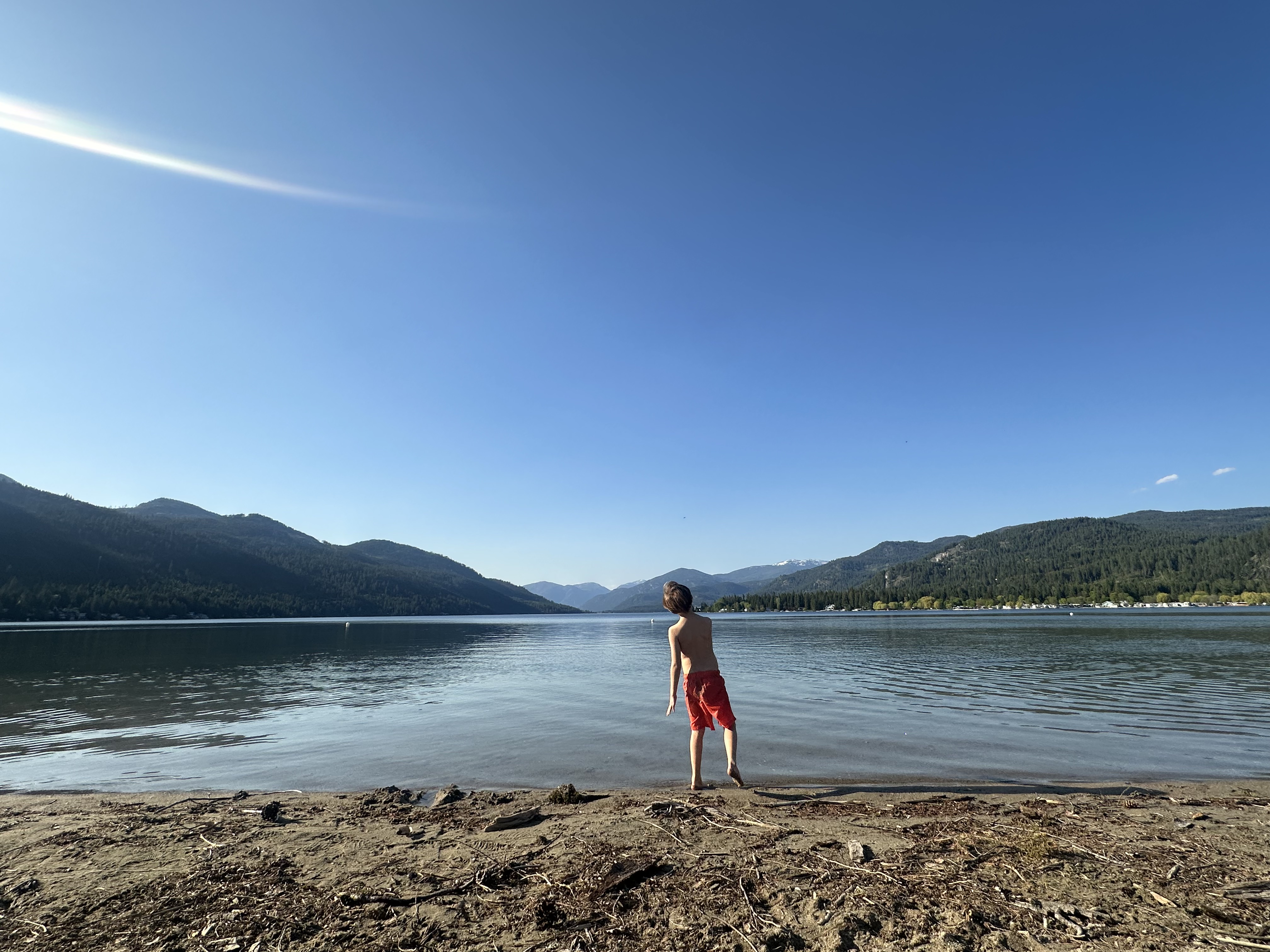
Most people meet Christina Lake in summer. They rent a cabin, swim in the warmest tree-lined lake in Canada, fall a little in love, and start wondering if they could actually live here. The answer is yes, and the reality is different from what most summer visitors imagine. Here’s what year-round living at Christina Lake is actually like.
The summer everyone knows about
From late June to early September, the lake comes alive. The water hits 23 to 25°C by July. The campground at Christina Lake Provincial Park fills up. Boats go in. The marina is busy. Restaurants run packed dining rooms. The community feels like a vacation village.
This is what most visitors see, and it’s genuinely beautiful. But it’s also only a few months of the year. If you’re thinking about year-round living, the rest of the year matters more.
What October feels like
October might be my favourite month here. The summer crowds are gone. The lake turns glass-still in the mornings. The cottonwoods along the shoreline turn gold. You can have an entire beach to yourself on a sunny afternoon. The community shifts from hosting to settling in.
This is when year-round residents come into their own. The grocery store, the post office, the cafe at the marina, the elementary school. These all keep humming through the off-season. The pace softens but the place doesn’t empty out the way some lake towns do.
Christina Lake winter is gentler than people expect
The lake itself moderates the climate. Cold snaps don’t bite as hard here as they do up at higher elevation in nearby communities. Most winters bottom out around -10 to -15°C. The lake rarely fully freezes. Snow sits on the surrounding mountains but the lakeshore communities get less than the upper Kootenays.
The downside: shorter days. The valley is east-west oriented, and the sun drops behind the mountains earlier than it does on flat ground. December afternoons get dim by 3:30. Light therapy lamps and good outdoor gear help. So does Red Mountain and Phoenix Mountain being close enough for ski days.
Schools and the daily commute
Christina Lake Elementary covers kindergarten through grade 7. It’s a small school (around 70 students) on a four-day school week (Monday to Thursday) with a strong sense of community. I was PAC President there for years, so I know it well. The teachers know every kid in the building.
For grades 8 through 12, kids ride the school bus into Grand Forks Secondary. The bus is reliable. The drive is 20 minutes each way on Highway 3. Most CL families adapt to this rhythm without much trouble. Some prefer it. Their kids get the small-village elementary experience and the bigger high school exposure later.
Curious about life in the bigger town? Here’s what daily life in Grand Forks is actually like.
The services question
Christina Lake has more amenities than most lake communities its size. There’s a grocery store (Huckleberry Mountain Market), a post office, a hardware store, several cafes and restaurants, a coffee shop, an art gallery, a library, and a medical clinic with three physicians. The clinic punches well above its weight for a community of 1,500.
For anything bigger (a major shop, specialist appointments, the hospital), Grand Forks is 20 minutes east. Most CL residents make a Grand Forks run weekly or bi-weekly. It’s an easy drive on Highway 3.
What the real estate looks like
Christina Lake has more variety than most people expect. Genuine waterfront homes on the east shore. Quieter family homes up the hillside with peek-a-boo lake views. Cabins and cottages on smaller lots. Vacant land for buyers who want to build. Boat-access cabins on the north shore.
Pricing varies wildly. A simple year-round home up the hill might be $400,000 to $600,000. A renovated lakefront home runs $1 million plus. Vacant lots range from $150,000 for a hillside lot to $1 million for waterfront. The market has more inventory than most lake communities, partly because some properties have been in families for generations and turn over when those families decide to let them go.
The parts visitors miss
Most summer visitors never see the trail system. The Trans Canada Trail runs through the area. Texas Creek and Sutherland Creek both have great hiking. Gladstone Provincial Park (just up the lake) has world-class kayaking and remote backcountry camping.
The arts community is small but real. The annual Mushroom Festival (I’ve been on the board for two years) brings hundreds of people to town in September. The community hall hosts events year-round.
Most importantly: the year-round community is tight. People know their neighbours. The volunteer base for the school, the trails, the festivals, the fire hall, all of it, is the same group of people doing all of it. If you settle here and want to be involved, you will be.
The lake people fall in love with in summer is the same lake all year. The community changes around it.
Things you should know honestly
Christina Lake is in RDKB Electoral Area C, not within a municipality. That means provincial water and septic rules apply, RDKB zoning controls land use, and there’s no mayor or council. Some people love this. Others miss municipal services.
Internet is decent in the village core. Some lakeshore properties and rural areas have Starlink as the best option. If working remotely is part of your plan, ask about specific internet at any property you consider.
Wells and septic are the norm. Most properties don’t have municipal water or sewer. This is normal for the area but adds a maintenance dimension city buyers aren’t used to. I always recommend a qualified home inspector with experience in rural properties.
Wildfire and smoke are real considerations. Some summers are clear. Some have weeks of smoke from regional fires. Air quality monitoring is essential if you or anyone in your family has respiratory concerns.
Who thrives here year-round
Lake people. Truly. If your weekends are about being on the water, in the woods, or by the fire, this place fits like an old jacket. People who like a smaller community where they’re known. Remote workers comfortable with rural rhythm. Couples downsizing or retiring. Families looking for a small school and a slow childhood.
Christina Lake is also a popular choice for retirees looking at the Boundary Country as an affordable alternative to the Okanagan.
People who struggle: those who need lots of dining options, regular live music, theatre, or shopping variety. CL has a lot, but it’s a village. If your idea of a fun Tuesday night is restaurant hopping, you’ll be making the drive to Grand Forks or Trail.
The honest test
Visit in October. Walk the village on a quiet weekday morning. Have coffee at the marina. Drive up the hill and look out across the lake. If that quieter, slower version of CL feels good to you, the rest of the year will too. If it feels like something’s missing, this might be a summer-cabin place rather than a year-round place for you.
Either way, get in touch. I love talking about this place. I moved here in 2021 with my family and have helped many others figure out whether it’s the right fit (including families relocating from Alberta). The conversation is free. The honesty is genuine.
Thinking of making a move to the Boundary Country?
I love helping people find the right property and the right community for their next chapter. Get in touch and let’s talk about what you’re looking for.
Contact KatherineDisclaimer. Real estate prices and market conditions change, sometimes quickly. The figures here reflect what I was seeing when this was written. For current pricing, listings, or specifics about your own situation, get in touch.